Tuesday, May 17, 2016

Swinging bridge

Next we crossed a huge floating bridge. The bridge remained connected to the shore on one side and when boats needed to cross, it would swing open so that it was parallel with the shore. It was pretty neat to watch. When we crossed to the other side, it was like we'd stepped into a different world. This side was a bustling city. Not a modern city though. They still had pay phones hanging everywhere with lines of people waiting to use them, rows and rows of dark dirty looking stores, just a few stores we recognized, alleyways with bars and convenience stores to buy drinks in, churches, art, food carts, and a grocery store which was just a long tarp with tables of produce. I really wanted to try some because it looked amazing but our ship warned us against eating or drinking anything off of the ship, so I decided I better not.  Most tourists didn't venture that far because it was a pretty long walk, so it was really cool to see the natives walking around, interacting, and doing their own thing. I felt lost and safe and overwhelmed all at the same time like I couldn't take it all in. It was so different than anywhere we'd ever been.

Venezuelan markets

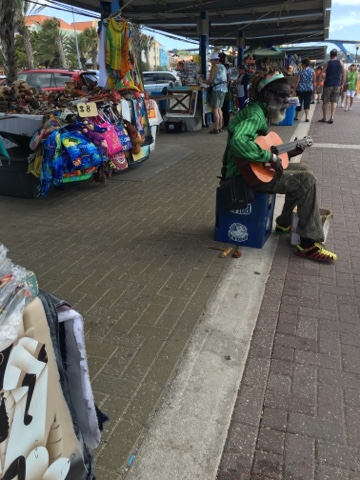
After the fort, we walked through a local market. Venezuela (the mainland of South America) is only a few miles away, so they come over in their little boats and set up tents and tables to sell little trinkets to tourists. Their skin was very, very dark compared to the Central Americans we'd seen on our last cruise. It felt a little more comfortable hearing Spanish again. We found out that they actually have three languages there: English, Dutch, and a native language called Papiamento that is a mix of English, Dutch, Spanish, and English.


Tuesday, April 12, 2016

Aruba at night

Next we got to experience Aruba at night. We've never been at port after sunset, so that was exciting. Our ship advised us not to eat anything at this particular port and only to drink bottled drinks there, so we went back to the ship to get food and change out of our beach clothes before exploring the city.  We did some souvenirs shopping, walked through the shopping district to the local vendor market, then we walked to their historic downtown where there was a street festival going on with music and drums being played in the streets and women with colorful dresses and headpieces dancing together in the street. It was like we had stepped right into carnival. We continued walked a little further to a modern shopping center and row of restaurants before calling it a night and heading back to the ship. Things that I noticed that amazed me: there were no stoplights just stop signs and round abouts, things were incredibly cheap especially from the local people that lived there handmade things that cost $20 at other ports only cost $1 there, they love cigars they had several stores just for them and all of the restaurants displayed them in the desert cases, they have free healthcare there and their one hospital was the smallest most run down building that I saw on he island (which makes Obamacare even more terrifying) and the culture was an amazing mix of Caribbean, Spanish, and Dutch the people were pleasant there were vibrant colors everywhere and it seemed rather modern almost gaughty yet mildly dirty. It was an amazing first stop because it was so different from any place we'd ever been.

Rif Fort

Our second stop was CuraƧao, and it was by far our favorite place we've ever been. Each part of CuraƧao was so distinct that I'm going to have to break it up into several posts. We booked a last minute excursion (again) (we were really going with the flow which isn't my usually style. I make plans and before that I make plans about making plans but sometimes a little spontaneity can be fun)  so after a long debarkation process we found our tour line only to find out we were going to have to wait and go in the afternoon so we decided to spend a few hours exploring the vibrant city before meeting back up for our excursion. We headed down the coast to a shopping center called Rif Fort. It was originally built in 1828 to protect the port. The outer walls remained and the inside had been revamped into shops and restaurants. We found some beautiful Dutch trinkets, listened to music, and enjoyed the smell of the fondue restaurants. It had a very European vibe which is so different from any other place we've visited.